Enhancing farmers’ quality of life through increased income
CInI’s Livelihood interventions focus on empowering tribal communities, especially women, to achieve sustainable and resilient incomes. Through initiatives like Lakhpati Kisan™, CInI supports smallholder farmers to enhance productivity, diversify crops, adopt climate-resilient practices, and access markets. The approach integrates improved agriculture, livestock, and allied activities with capacity building, collective marketing, and enterprise development. Special emphasis is placed on women-led producer groups and Farmer Producer Companies, enabling them to take leadership in value chains.
Highlight
In the Lakhpati Kisan™ model, FPOs are the backbone—helping farmers aggregate produce, reduce input costs, negotiate better prices, and reinvest profits for community prosperity. They enable smallholder farmers become empowered entrepreneurs.
Unpredictable rainfall patterns, high production costs and meagre yields are some of the obstacles that create a constant cycle of debt for tribal farmers living in the Central Indian Tribal belt.
CInI’s Lakhpati Kisan Program (LKP) confronts these challenges through a multifaceted strategy that involves diversifying cropping practices, introducing high-value crops, and ensuring reliable irrigation.
LKP strives to enhance income of the farmers by supplementing agriculture-based livelihoods with high income-generating alternatives such as livestock and Non-Timber Forest Products (NTFP), in order to hedge risks and ensure secured income.
As a development organization working for farmers, CInI has also added a unique initiative Charkha to Market (Antaran) in South Odisha as a part of the livelihood theme. It is a handloom development programme that aims at arresting the drift of the younger generation of weavers from the handloom sector by creating entrepreneur-led microenterprises.
Moving towards the Lakhpati way...
Phase 2
With a diligent focus on sustainability. Phase 2 aims to encompass 160,000 families, with 110,000 families continuing from the previous phase as integral community institution members.
Till date, over 49,000 families have achieved annual incomes exceeding INR 1,00,000.
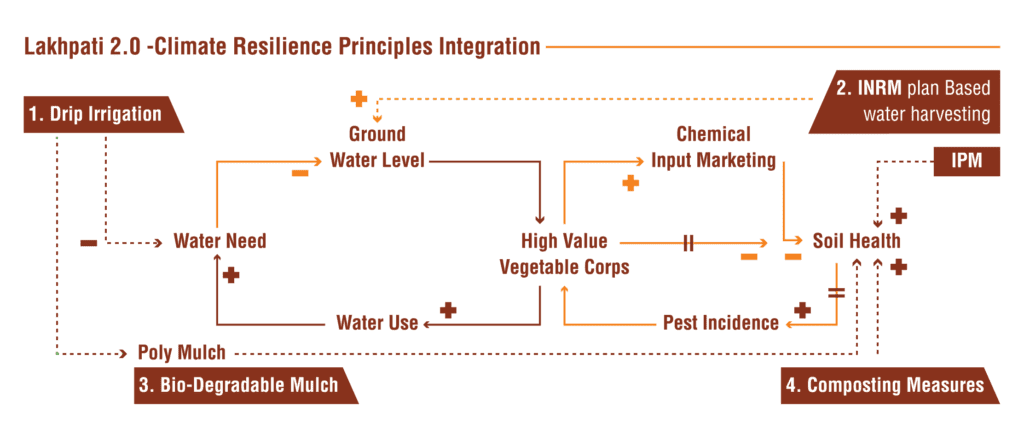
Climate Resilience Concentrated efforts have been made to address climatic challenges like erratic rainfall, rising temperatures, declining groundwater, and soil health. Developing climate resilience strategies has been a collaborative effort rooted in local ecosystems and enriched by community institution insights, to serve small and marginal families effectively.